


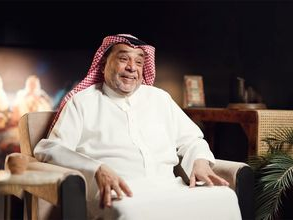
The story of Dr. Rashid Al Shamrani is also the story of Saudi theatre itself. He began in an era when artists built stages from passion, patience, and personal effort. Today, he stands inside a new cultural moment, where theatre, cinema, and performing arts are part of Saudi Arabia’s national transformation. His journey connects the early dreamers with the bold future of Vision 2030.
At the center of that journey is a Saudi actor, playwright, writer, and psychologist who never treated performance as entertainment alone. For Dr. Rashid Al Shamrani, theatre became a way to understand people. Television became a way to reflect society. And psychology became a deeper path into the characters, emotions, and contradictions that shape human life.
A Childhood Shaped by Movement
Rashid Al Shamrani was born in Unaizah in 1960. But his early life did not stay in one place. Because of his father’s military work, he moved between several cities in Saudi Arabia and even spent time in Jordan. These moves gave him more than memories. They gave him a living archive of dialects, customs, gestures, and local personalities. He later reflected that place itself has a character. The land, the people, the voice of a city, and the small habits of daily life all leave something inside a person. For an actor, this is gold. Long before he became known for his ability to capture Saudi characters, Rashid was already collecting them.
The Father Who Opened the Door to Imagination
Rashid Al Shamrani’s father was a simple man and a military figure. Inside the family home, Rashid found books that opened new worlds for him. Stories of Antarah, Al-Zeer Salem, Hamza Al-Bahlawan, and Saif bin Dhi Yazan introduced him to Arab heroism, history, courage, and imagination. Those books shaped his inner world. They taught him that stories carry values. They taught him that history is not only dates and battles, but emotions, choices, pride, and identity.
“Reading created that attraction inside me. My father’s role in this point was great.”
The First Stage: School Theatre
Rashid Al Shamrani’s first contact with theatre came during primary school in Al-Kharj, at Al-Waleed bin Abdul Malik School. There was a school theatre. He went toward it. He did not know exactly why. But once he arrived, the place did not feel strange to him. Later, in Tabuk, a teacher named Majed Al-Khateeb helped create a theatre stage from almost nothing. Rashid also remembered another early teacher, Abdulrahman Al-Khuzaim, who encouraged his stage presence.
These were not glamorous beginnings. They were simple. But they were real. Saudi theatre, for many of its early talents, began this way: with teachers, school halls, handmade stages, and young people who felt something powerful when they stood in front of others.
King Saud University: The Real Turning Point
The biggest artistic shift came at King Saud University. Rashid first encountered the university theatre after winning second place in a short story competition. At the closing ceremony, he watched a play titled Waiting for the Train. The stage had a red curtain, lighting, music, sound effects, and a real theatrical atmosphere. For him, it was magic. The next day, he went to register in the university’s cultural activity department.
King Saud University Theatre became his training ground. He described it almost like a theatre institute. It gave students discipline, language, rehearsal culture, and direct contact with serious performance. It was also a meeting point for future Saudi media and arts figures. Students from medicine, engineering, education, and other colleges all joined theatre teams. This was a generation that made art through passion before the sector had today’s formal institutions.
The Actor Who Studied Psychology
Rashid Al Shamrani studied psychology at university. At first, the path was not fully planned. He had briefly entered commerce and accounting, then left. Later, when he joined the College of Education, psychology attracted him. He had studied it in high school and felt close to the subject. That choice became one of the most important parts of his identity. Psychology helped him understand people, but he was careful not to turn acting into a cold academic exercise. He knew that performance needed life, instinct, and connection.
From University to Taif: Theatre Would Not Let Him Go
After graduation, Rashid believed his artistic life might end. He thought theatre was a university activity, something he would leave behind once work began. Then he moved to Taif. On the same day he arrived, he began searching for the local branch of the Saudi Arabian Society for Culture and Arts. Theatre was not finished with him. In Taif, he participated in early stage work, including the monodrama A Page in the Mirror. Soon after, he wrote his first theatrical text, Ma‘ Al-Khail Ya Arabaan, which went to the first Gulf Youth Theatre Festival in Kuwait. He kept telling himself, “This is the last work.” But the stage kept calling.


Building Saudi Theatre With Experiment and Heritage
Rashid Al Shamrani's theatre work did not follow one narrow style. He explored comedy, folk memory, psychological drama, and experimental theatre. His play Owais the Nineteenth, the political and social satire that made the show a massive hit, directed by Amer Al-Hamoud, became part of the conversation around new Saudi theatre. Critics later connected it to the rise of experimental theatre in the Kingdom.
Then came Deek Al-Bahr, one of his most important theatrical works which earned international recognition at the Carthage International Theater Festival. The play drew from Jazani folk heritage. It did not use heritage as decoration. It used it as drama. Rituals, dances, rhythms, sword traditions, and community ceremonies became part of the theatrical structure. This is where Rashid’s artistic vision becomes clear. He understood that Saudi culture is not background. It is material. It has rhythm, conflict, beauty, and theatrical power.
Abu Hilal: A Character That Refused to Disappear
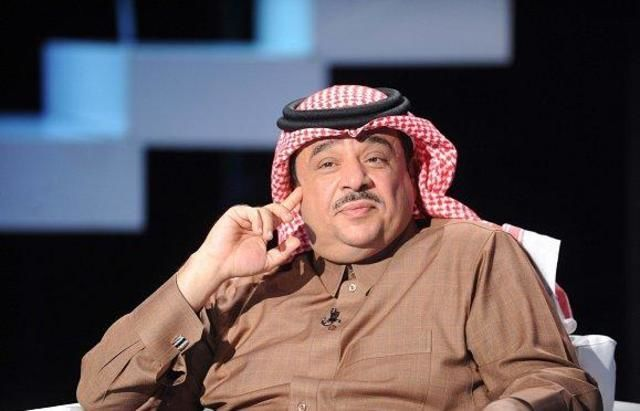
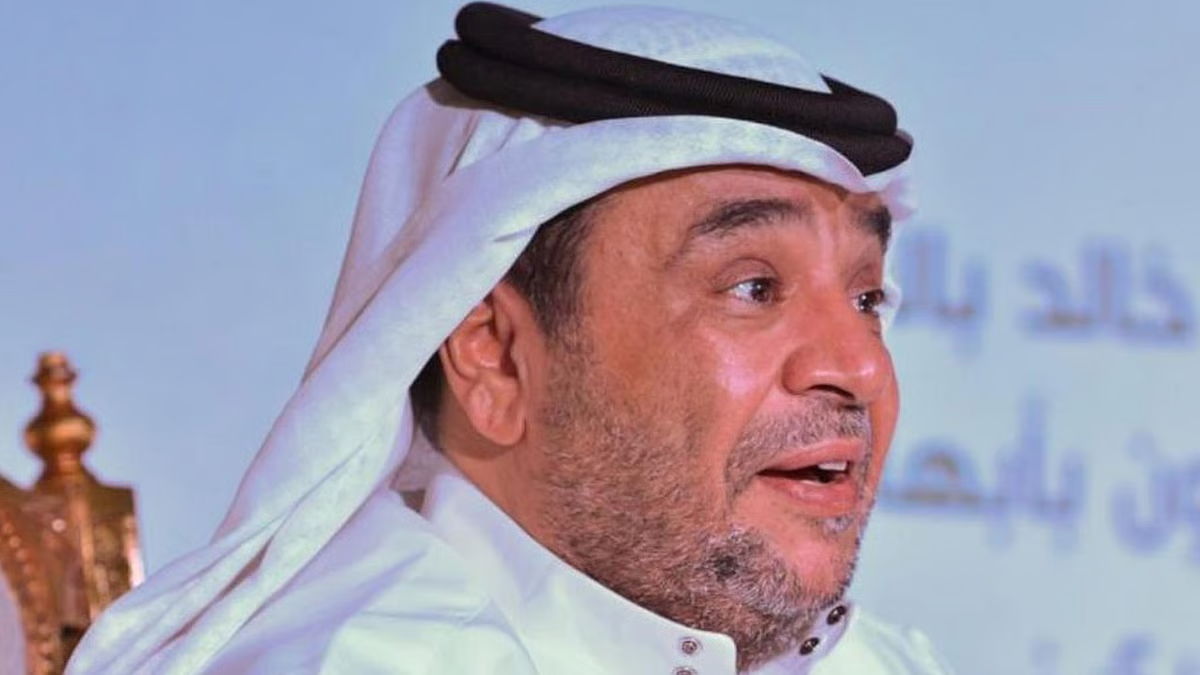
Many Saudis remember Rashid Al Shamrani through the character Abu Hilal from Hamoud wa Hmeid. The role became iconic almost by accident. Rashid explained that much of the famous scene was improvised. The cast laughed so much during filming that they had to stop again and again. No one expected it to live for decades. But Abu Hilal had something rare: he felt familiar. He was exaggerated, funny, spontaneous, and deeply local. People recognized the type. They knew his voice. They knew his body language. This became one of Rashid’s great strengths as an actor: he could create characters that felt larger than life but still close to real life.
Tash Ma Tash and the Power of Local Comedy
Rashid Al Shamrani was also part of the world of Tash Ma Tash, the legendary Saudi comedy series that became part of Ramadan memory. He believes its success came from its closeness to people. The show looked like society. It spoke with local voices. It entered sensitive topics through comedy at a time when many avoided them. That was the secret. Comedy was not only laughter. It was a way to discuss reality. For Saudi audiences, Tash Ma Tash became more than a show. It became a mirror. A funny mirror, yes, but one that showed real social questions.


Al-Wasel and the Characters We Know
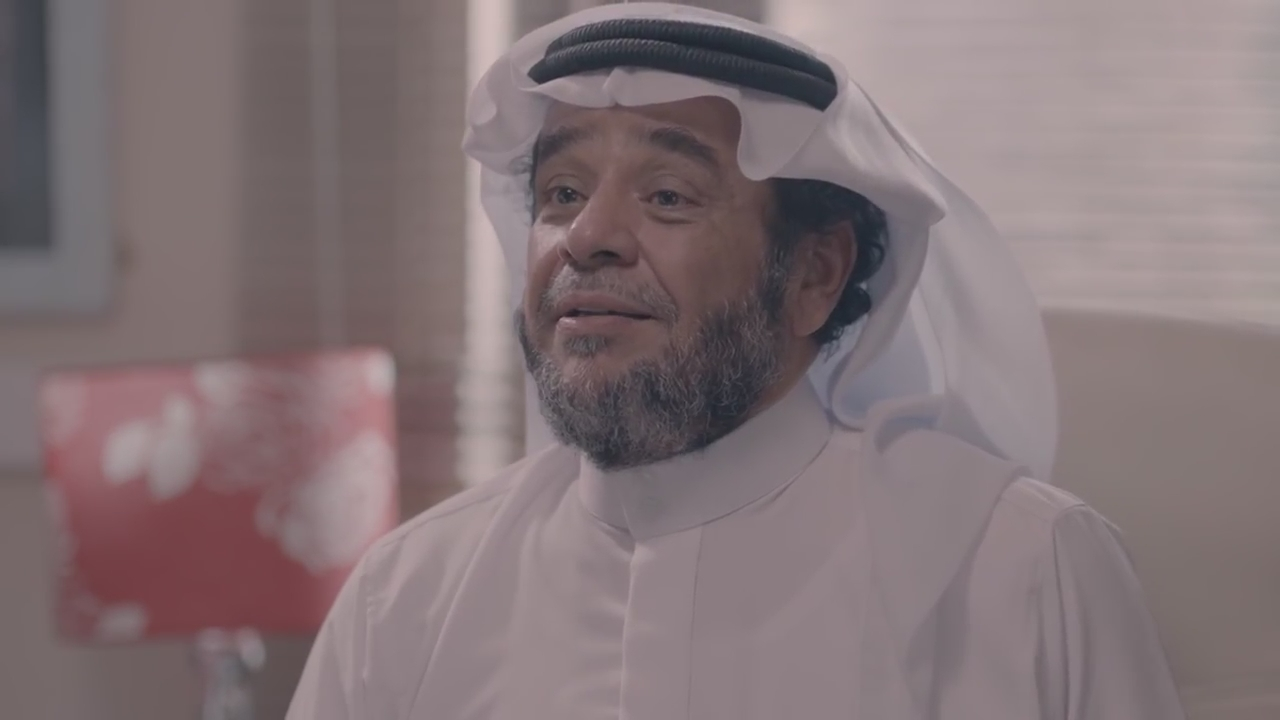
In Bayny wa bynak, Rashid Al Shamrani played another memorable character: Al-Wasel. The character worked because people knew someone like him. Confident. Social. Manipulative. Always speaking as if he fully understood the world. Rashid said people still tell him, “We have someone in our group called Al-Wasel.” That is the sign of a successful character. It leaves the screen and enters daily language.
Psychodrama: Where Art Meets Healing
Rashid did not stop at acting and writing. He continued his academic path and specialized in psychodrama, a field that connects drama with psychological therapy. After studying psychology, he worked in a psychological clinic as a specialist. His master’s degree focused on psychological stress and its relationship with lower-back pain. Later, he discovered psychodrama, and it felt like the missing link between his two worlds: theatre and psychology.
Because Saudi Arabia did not yet have specialized institutes for this field, Rashid searched abroad. His path eventually led him to Mohammed V University in Rabat, Morocco, where he pursued his doctorate with support from a Ministry of Defense scholarship. His doctoral work focused on using drama therapy with patients experiencing depression. This gave his artistic journey deeper meaning. He was not only performing human behavior. He was studying how expression, role-play, and emotion could help people understand themselves.
Cinema and the Saudi Screen
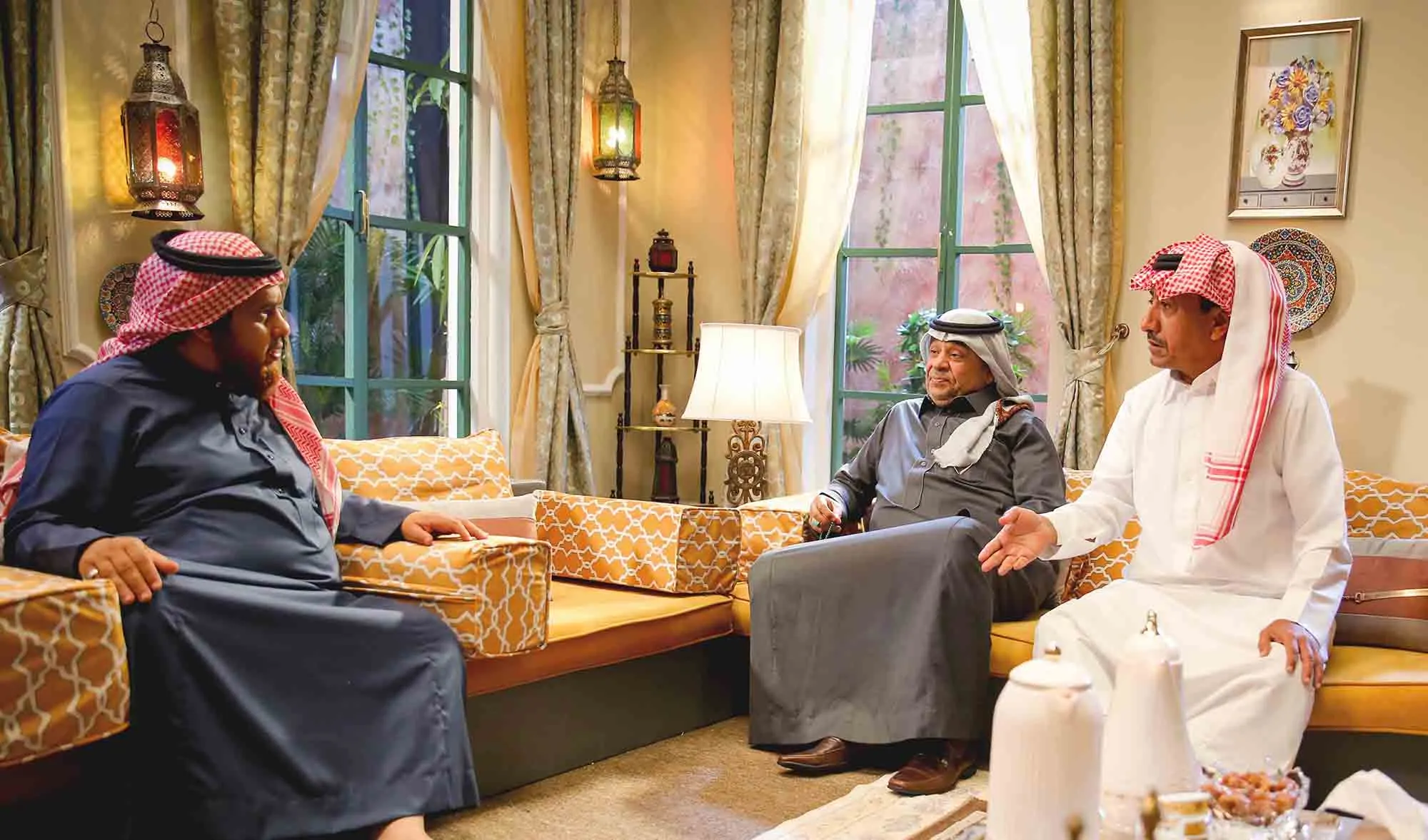
Rashid also entered cinema through projects such as Sabah Al-Lail, which he wrote and acted in. The film brought back Abu Hilal in a new way, moving him through historical Arab eras and comic situations. It was shown at film events including Dubai, during a time when Saudi cinema was still finding its early modern path. That makes the work important. It belongs to the generation that experimented before the current cinema boom. Today, Saudi cinema has institutions, festivals, funding routes, and young talents. Rashid saw the road before it became wide.
From Artist to Cultural Leader
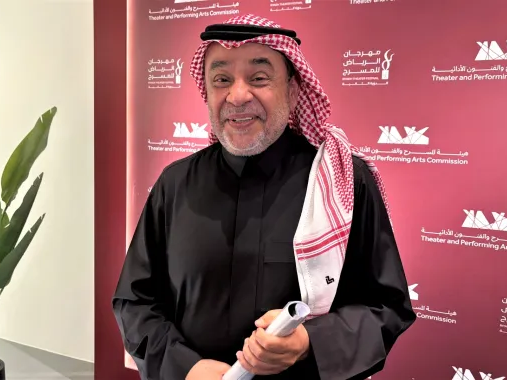
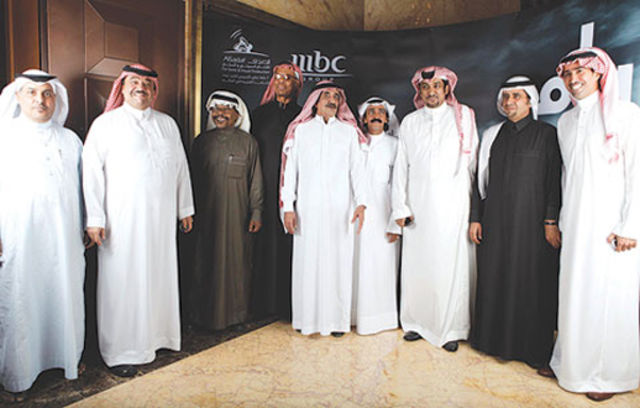
In recent years, Rashid Al Shamrani has also become part of Saudi Arabia’s cultural leadership through his role with the Theatre and Performing Arts Commission. For him, this transformation is emotional. He remembers a time when theatre artists did not ask for much. Their biggest hope was simply that no one would stop them. Now, Saudi theatre has commissions, festivals, strategies, training, and future academies. This is a major cultural shift. It reflects the wider spirit of Vision 2030: building platforms for creativity, investing in talent, and turning passion into a professional sector.
Awards & Achievements
- International Theatre Honors: Won the Special Jury Award at the Carthage International Theatre Festival (1994) for his play Deek Al-Bahr, which also received recognition from Voice of the Arabs Radio at the Cairo International Festival for Experimental Theatre.
- Best Playwright Award: Named Best Text Writer / Best Playwright at the 9th GCC Youth Theatre Festival. (Arriyadiyah)
- Regional Stage Footprint: Performed across major Arab and Gulf platforms (Kuwait, Damascus, Cairo, Carthage) with acclaimed plays like Ma‘ Al-Khail Ya Arabaan, Owais the Nineteenth, and Ibn Zuraiq Limited.
- Television Icon Status: Shaped Saudi pop culture and comedy through defining roles in landmark series like Tash Ma Tash, Awdat Asoid, Kalam Al-Nas, and his highly memorable portrayal of "Al-Wasel" in Baini wa Bainak. (Arriyadiyah)
- Pioneering Cinema: Wrote and starred in Sabah Al-Lail, a film screened at the Dubai and Rotterdam Arab Film Festivals well before the modern Saudi cinema boom.
- Academic Expertise: Earned a PhD specializing in psychodrama, focusing on drama therapy for patients experiencing depression.
- Cultural Leadership: Appointed by the Ministry of Culture to the board of the Theatre and Performing Arts Commission (2024) and served as the Director of the Riyadh Theatre Festival. (Saudi Press Agency)
- Industry & Stage Legacy: Honored at the Innovative Performances Forum (Al Riyadh) and returned to major stage productions like Theeb fi Al-Qaleeb and Tar Bel Ajja.
- High-Profile Presence: Maintains a prominent industry footprint at major regional events, including public appearances at the Joy Awards in Riyadh. (al-marsd.com)

The Lasting Voice of a Pioneer
Dr. Rashid Al Shamrani’s journey is not only the story of one artist. It is the story of Saudi theatre growing from school stages to national institutions. It is the story of television becoming part of family memory. It is the story of an actor who understood that the most powerful characters are the ones people already know in their hearts. He built his career on observation. He respected local culture. He trusted the Saudi voice. And he proved that comedy, psychology, heritage, and theatre can all meet in one meaningful life.
Follow his journey on X, Instagram, and LinkedIn.


